This blogpost contains spoilers.
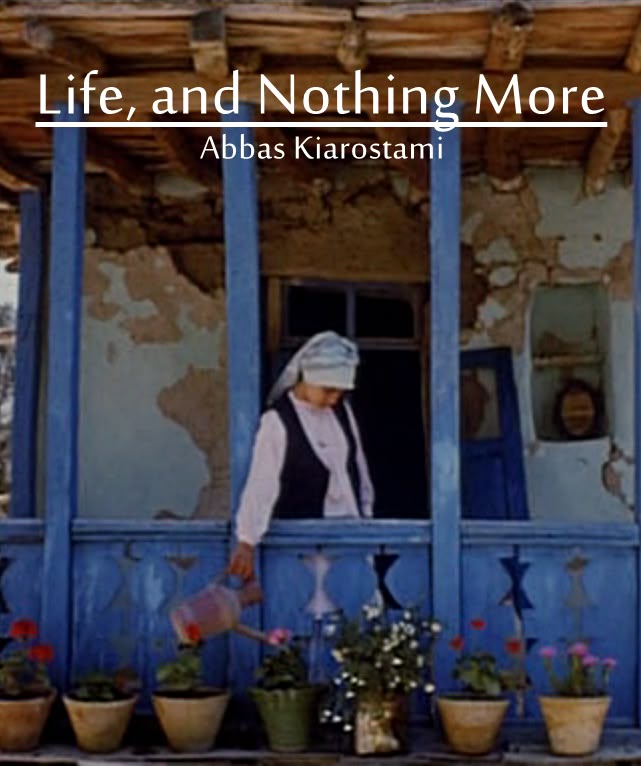
“Life, and Nothing More” (زندگی، و دیگر ھیـچ), the 1992 film by Iranian director and writer Abbas Kiarostami, is a powerful introduction to the filmmaker’s work. A film so simple and direct in its framing and communication, so without pretence and filter, it is almost disturbing and jarring. The sparsity of dialogue lets the place and people speak so much more than they would be able to otherwise. There is a lot being said here between the lines.
I’m not aware of any existing comparisons and influence, but the movie possesses a quality in its framing and colors which reminded me of Wes Anderson. It is a bit like listening to Alan holdsworth after listening to Fredrik Thordendal’s lead guitar work. But the film is without Anderson’s humor, which is of course appropriate given the subject matter. Which is not to say that the film doesn’t have a light side. The lightness is brought by the characters’ deep determination to carry on in the face of tragedy and grief, specifically the children. Amidst all the destruction wrought by the earthquake, Puya has his own agenda: the football. The football, the wedding, the Indian style toilet – all deadly serious matters.
Thus there is innocence but also deep grief. Death, but hope as well.
But what does the protagonist want? He sure asks a lot of questions. But so many of my own were left unanswered. What is he looking for? Is he sincere? What is he hoping to achieve? Does he make it to Koker? In the end, the man who has to go on, with the orange cylinder, does. The man who doesn’t, turns back. But only to return for another attempt to move forward, like all of them. And this time he does give a lift to the man with the orange cylinder.
What else is there to do except moving forward after death? Except to live life? To be married, to wash the clothes, to find a shovel to dig out people and rugs from underneath the rubble? And to watch football after having lost loved ones?
“Life, and Nothing More” is a beautiful portrayal of life after death. If it is sometimes puzzling, the subject matter explains why.
 Daniyal Khan