Money and Central Banking ECON 3602 (LUMS, Spring 2024)

This course presents some salient problems and debates in the social scientific study of money and central banking from the point of view of economic theory and history. Instead of working in a conceptual vacuum or an assumed “natural” state of affairs, the study of money and central banking is situated in the study of capitalism as a historically specific social order. In other words, money and central banking are given sociological grounding. To this end, the course will begin with Geoffrey Ingham’s analysis of competing theories of money, general problems in the development of a theory of money, and an overview of the history of money. This first module will also include time spent on money, markets and central banking in Pakistan. The Pakistan specific discussion and Ingham’s work, being sympathetic to heterodox ideas, will serve as the gateway to grounding money and central banking in the history of monetary thought. This leads to the second module on the ideas of Henry Thornton and Walter Bagehot, the Bullionist debate of the 19th century and the respective positions of the Currency School and the Banking School. This history directly helps inform and contextualize the contemporary debate between the endogenous money and exogenous money positions. The third module will introduce students to the work of Charles Goodhart, arguably the foremost contemporary theorist of central banking. The course will conclude with the study of financial instability, crisis, and a selection of present and anticipated problems in money and central banking.
Note: a more recent version of the course taught in spring 2025 included selected readings from Moschella and Monnet’s 2024 books on central banks. The tripartite division of the course was inspired by both the 3-term (quarter) system that used to be in place at LUMS when I was a student, and also the tripartite structure commonly used in tabla compositions such as tihais and guts.
The Life and Work of John M. Keynes LECO 3119 (Lang, Fall 2019)
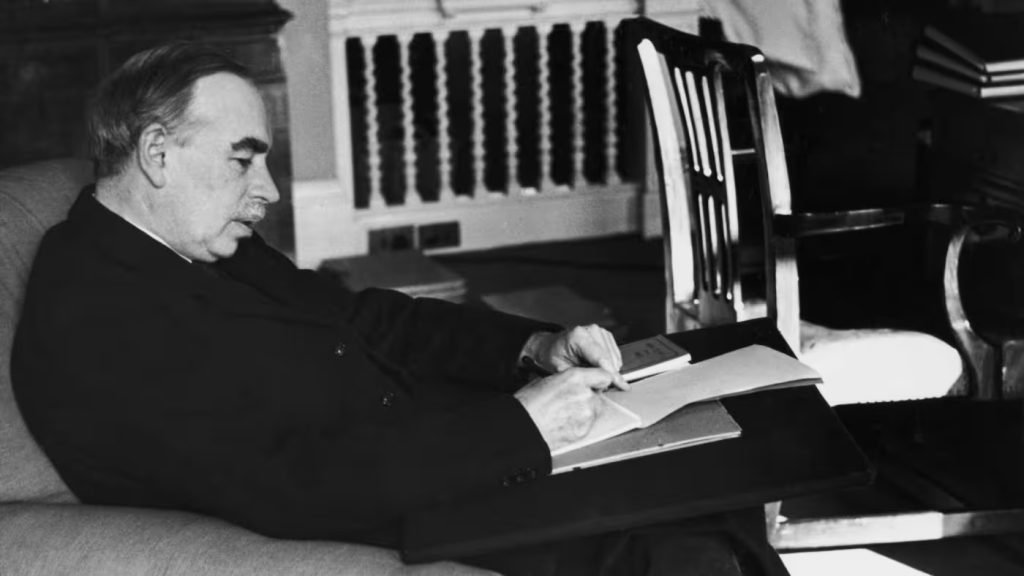
The years following the first great recession of the twenty-first century have brought John Maynard Keynes’s ideas back to the forefront of academic and public life. There is also renewed interest in questions about the viability and the future of capitalism. In this historical context, the course introduces Keynes as an important historical character whose life provides insight into the unfolding of the first half of the twentieth century by virtue of his proximity to important historical events. Second, the course provides a survey of Keynes’s writings, with particular attention to the relationship between his life and the formation of his ideas. Third, the course will engage with the big, far reaching questions Keynes was asking about the nature of capitalism and about the human condition. In doing so, the course takes students into Keynes’s life and ideas beyond his role of an economist. For students of economics and capitalism, Keynes and his ideas are unavoidable, and this course provides that necessary engagement.
Studying Capitalism LECO 2020 (Lang, Spring 2019)
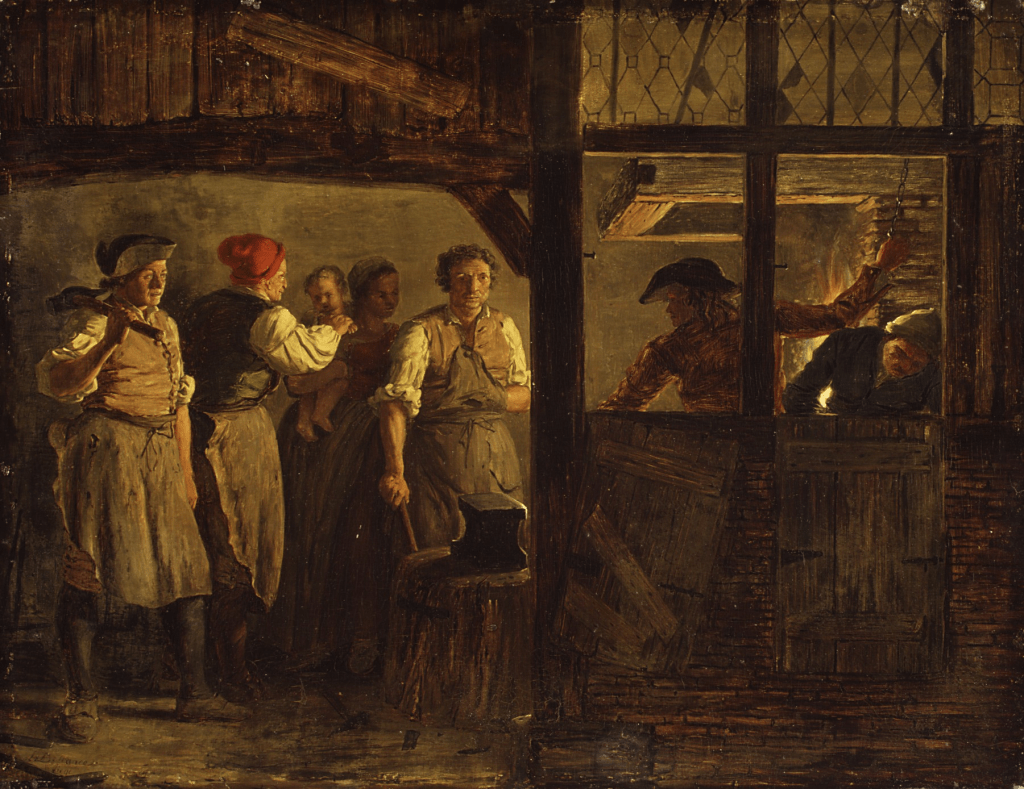
The course provides an introduction to the social scientific study of capitalism as the social and economic system of our time. Capitalism transforms human life and is transformed by human life. For anyone who lives in the early twenty first century and hopes to make sense of the world we live in, a basic understanding of the foundations, rhythms, tendencies and pathologies of this system is indispensable. Besides providing this basic understanding, the course will also provide an opportunity to explore themes of contemporary relevance in greater depth. For example, among other themes, the course may explore cultural aspects of work and labor under capitalism, and contrasting views of the historical causes of the crisis of 2007-08. By the end of the course, students engaging actively with the course material should have the conceptual tools to more closely analyze and scrutinize their own experiences and observations.
Intermediate Macroeconomics ECON 221 (LUMS, Fall 2024)

This is a second-year course in macroeconomics and extends the discussion covered in the introductory course “Principles of Macroeconomics”. The course presents an intermediate synthesis, treatment and exploration of issues and problems in macroeconomics. Students will learn to conceptualize and analyze the economy as a whole rather than as a simple sum of its microeconomic constituent parts. Beginning with the IS-LM model and its historical background, the course will teach students how macroeconomics brings together models of different markets (goods, finance, labor) to combine them into a holistic analysis of the economy. The policy problems and tools (fiscal and monetary) arising routinely in the macroeconomic study and management of economies will be discussed at a level beyond that of a first undergraduate course in economics. Through this course of study, students will have the chance to learn about and reflect on problems relating to the role of government in the economy in contrast to the private sector, and the recurrence and persistence of crisis and turbulence in macroeconomic history. The course will conclude with remarks and reflections on the history and methodology of macroeconomics. By the end of the course, students should be able to employ some intermediate level macroeconomic concepts and tools to try to understand their macroeconomic surroundings.
 Daniyal Khan